Canadian Academy of Osteopathy: Leading with Principles
A New Kind of Leadership in Healthcare
In today’s fast-moving healthcare world, it’s easy to lose sight of what really matters—patients. The Canadian Academy of Osteopathy (CAO) has built its reputation by putting people back at the centre of care. Its focus on principles-based osteopathy is changing how practitioners are trained and how patients experience healing.
“We started with one simple goal,” says a senior faculty member at the academy. “Teach people to think, not just follow instructions. Real healing happens when a practitioner understands the person in front of them.”
That belief has guided the CAO’s journey from a small educational institution to a recognised leader in osteopathic training.
Why Principles Still Matter in Modern Healthcare
Modern healthcare often runs on protocols—structured steps that work well for emergencies but not always for long-term wellness. Many patients move through a maze of specialists and treatments without ever feeling heard.
The CAO takes a different view. Its model is rooted in the teachings of Dr. Andrew Taylor Still, who founded osteopathy more than a century ago. He believed the body is an interconnected system capable of self-healing when its structure and function are in balance.
“Our students learn to connect the dots,” explains an instructor. “If someone has headaches, the answer might be in the spine, posture, or even digestion. The body doesn’t work in sections, so neither should we.”
It’s a philosophy that’s gaining new relevance as chronic conditions rise. The World Health Organization reports that chronic diseases now cause 74% of global deaths—a stark reminder that symptom-based care alone isn’t enough.
The CAO Approach: Teaching Critical Thinkers
At the Canadian Academy of Osteopathy, students aren’t trained to memorise a list of treatments. They’re taught to analyse, question, and adapt.
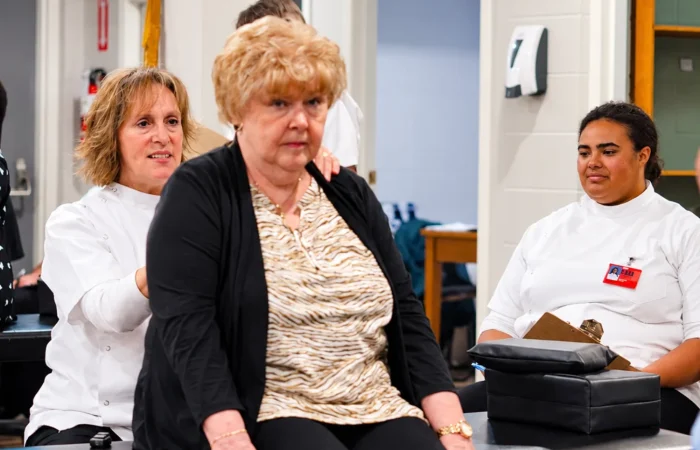
The academy’s four-year programme blends deep study of anatomy and physiology with supervised clinical practice. Students learn by treating real patients under experienced guidance. “We push them to think through every case,” says one faculty leader. “They must explain why they’re doing something, not just how.”
One student case stands out. A man came in with constant shoulder pain. Instead of focusing on the shoulder itself, the student traced the problem to a rib restriction affecting muscle movement. After releasing the rib tension, the pain eased. “That’s the kind of reasoning we teach,” says the instructor. “It’s not magic—it’s applied logic and anatomy.”
Bridging the Gap Between Science and Humanity
Healthcare technology is advancing fast, but many patients still feel unseen. The CAO’s approach helps bridge that gap by training practitioners to listen first and act second.
“Patients tell you what’s wrong if you let them,” one practitioner notes. “You just have to ask better questions.”
This attention to detail helps osteopaths work effectively alongside other health professionals. Many graduates go on to work in multidisciplinary clinics, sports centres, and wellness practices. Others start their own private clinics, bringing whole-body care to communities across Canada.
It’s a balance of science and empathy—grounded in evidence, yet human at its core.
Meeting the Demands of Modern Patients
Patients today want options. They’re more informed, more curious, and more invested in their health. The CAO trains its graduates to meet that demand through personalised care.
A graduate recalled a patient who had been through every test imaginable for chronic fatigue. “She felt defeated,” he said. “When I explained how her body systems might be connected—structure, breathing, and movement—she lit up. No one had ever told her that before.”
That interaction reflects the growing shift toward integrative, principles-based care. Patients don’t just want results; they want understanding.
Building a Sustainable Career
A career in principles-based osteopathy offers more than a paycheque. It’s a chance to make a real difference while maintaining independence and flexibility.
Graduates from CAO often join professional organisations such as Osteopathy Canada (OSTCAN) and find opportunities in private practice, multidisciplinary clinics, and performance settings. The demand is strong and expanding. In Canada, more than 60% of adults use some form of complementary healthcare, a number that continues to climb.
One graduate put it simply: “You’ll never be bored. Every patient teaches you something new.”
A Modern School with Timeless Values
While the science of healthcare evolves, the CAO’s message stays consistent—go back to principles to move forward.
The academy is not just teaching techniques; it’s shaping the next generation of problem-solvers in healthcare. Its leadership continues to advocate for whole-person approaches, critical thinking, and lifelong learning.
“Our graduates don’t just treat pain,” says a senior faculty member. “They help people understand their own bodies again. That’s powerful.”
For those looking to enter a meaningful, people-focused profession, the Canadian Academy of Osteopathy stands as an example of what education can achieve when it values both science and humanity.